
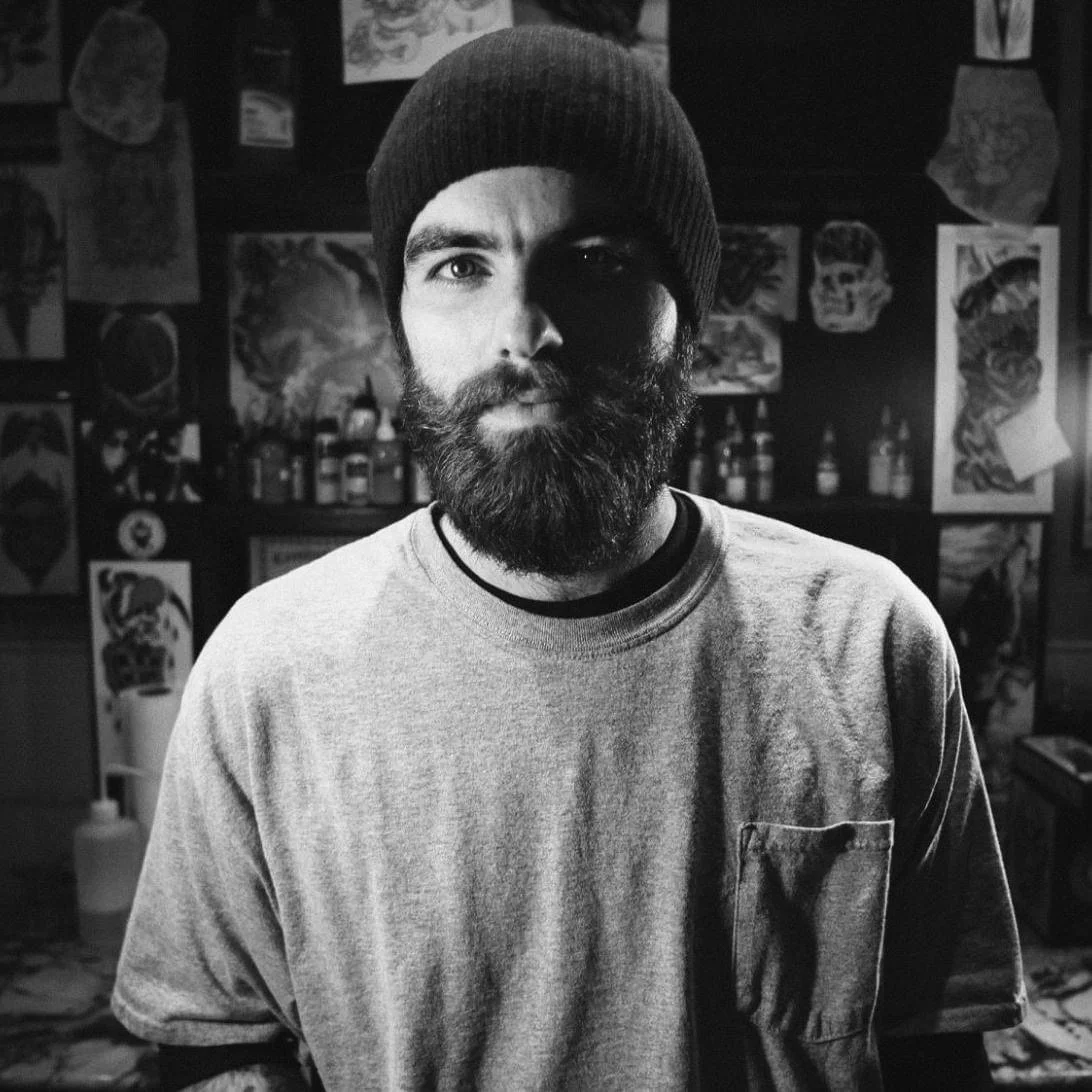
As of 2025, I’ve been an artist for 33 years. I started young, and for one reason or another, I never stopped. The circumstances of my childhood undoubtedly provided kindling for the fiery ambition I already possessed. It didn’t matter where I was, who I was with, or what we were doing; I always found a way to draw or create. I carried small drawing pads to appointments, practices, and classrooms. I would occasionally pause a VHS tape just to draw a still frame from the television. I seemed to fail at everything else I tried, but no matter how difficult something felt or how long it took, I could sit silently for hours and draw.
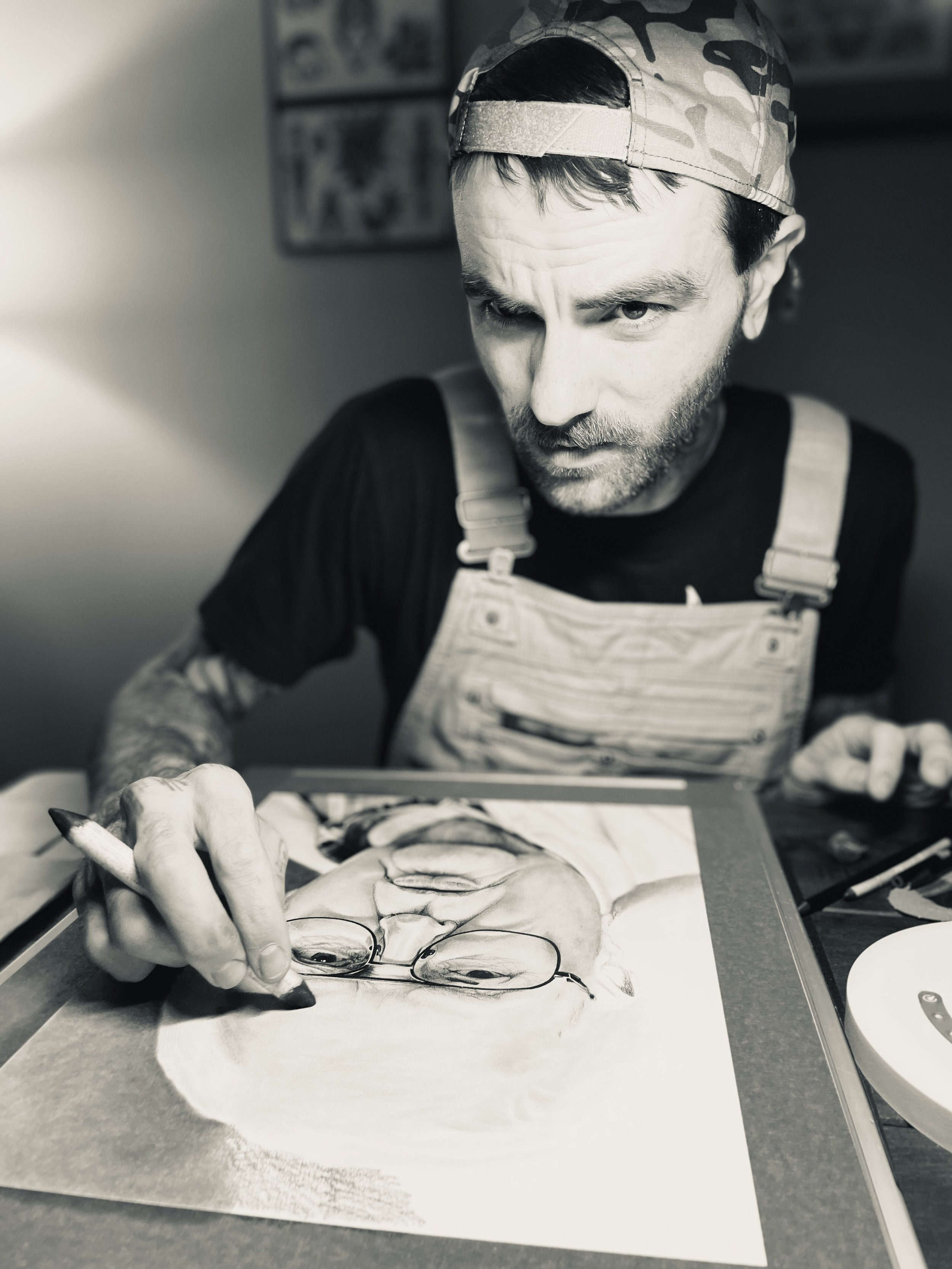
As a kid, I drew cartoons and Hot Wheels, and even illustrated and labeled insect anatomy for my teachers. I was never able to take an art class in school. From middle school through high school, my teachers would try to leverage better grades to get me into their art classes. My anti-authoritarian attitude meant we butted heads over this constantly. They would say, “If you get better grades, we’ll put you in our class.” I would respond, “If you put me in art class, I’ll get better grades.” That same attitude eventually pushed me into graffiti. The world of graffiti was, honestly, not always good for me, but I became fascinated by its scale, its semi-permanence, and its visibility within a community. The ability to cover a canvas the size of a wall was intoxicating.
Eventually, my involvement in graffiti led to a violent confrontation with a local gang. I was attacked, fracturing my jaw and breaking two fingers. But that same stubbornness that had pushed me toward graffiti also pushed me to find a way to settle those conflicts through art. Years later, I created graffiti using their gang name as an acronym and painted it on the side of a semi-trailer. When I later encountered members of that same gang at a skate park, they greeted me with respect and hugs that I still carry with me today.
For much of my childhood and young adulthood, I had imagined a very different path for myself. I wanted to join the military. Part of that desire came from the influence of my upbringing, and part of it came from wanting to follow in my grandfather’s footsteps. I looked at his life and his work with tremendous admiration, and I wanted to find my own way into something disciplined, demanding, and meaningful.
At eleven years old, however, my life took an unexpected turn. Following a vaccination, I was diagnosed with Type 1 diabetes. From that point forward, physical labor and strenuous activity could carry consequences for my health that I had never had to consider before. The military career I had imagined for myself was no longer an option.
Tattooing eventually became the path that allowed me to build a life around the one thing I had always been able to do: create. Like graffiti, tattooing carried permanence, but with a very different kind of expiration date, a tattoo lasts for the lifetime of the person who wears it. That fascinated me. At the time, I didn’t yet understand the culture, heritage, and lifestyle that came with tattooing.
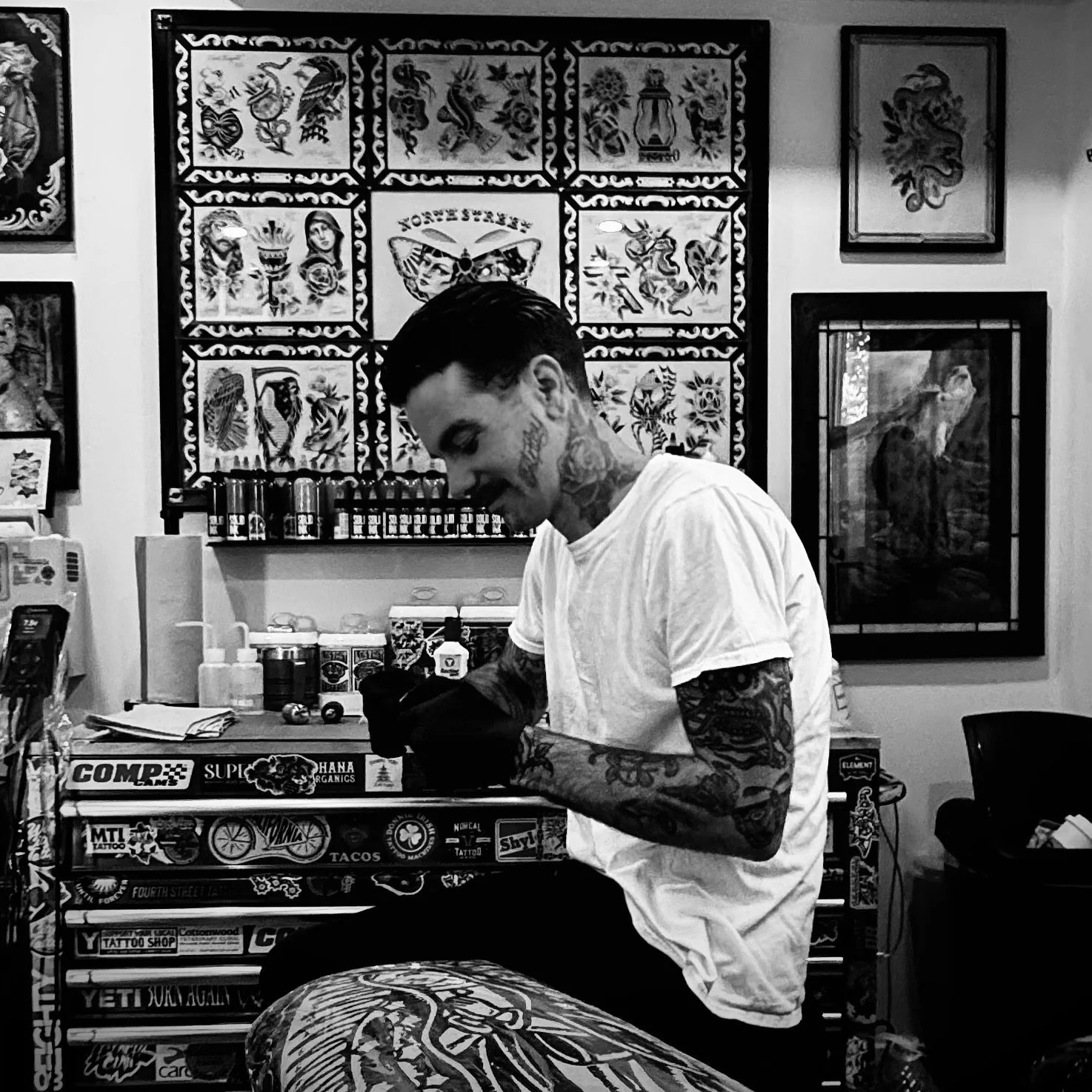
I began tattooing at fifteen. For the next four years, I taught myself through experimentation and persistence. It wasn’t until 2009 that I finally found an apprenticeship. That apprenticeship lasted two years and eventually led me to open my own tattoo shop in my hometown of Anderson, California, North Street Tattoo. Over the years, I explored countless styles and techniques within the tattoo industry, gradually refining my own approach. Eventually, I became proficient in nearly every style I attempted and went on to receive 36 awards for my tattooing. I became particularly known for drawing and tattooing animals and wildlife.
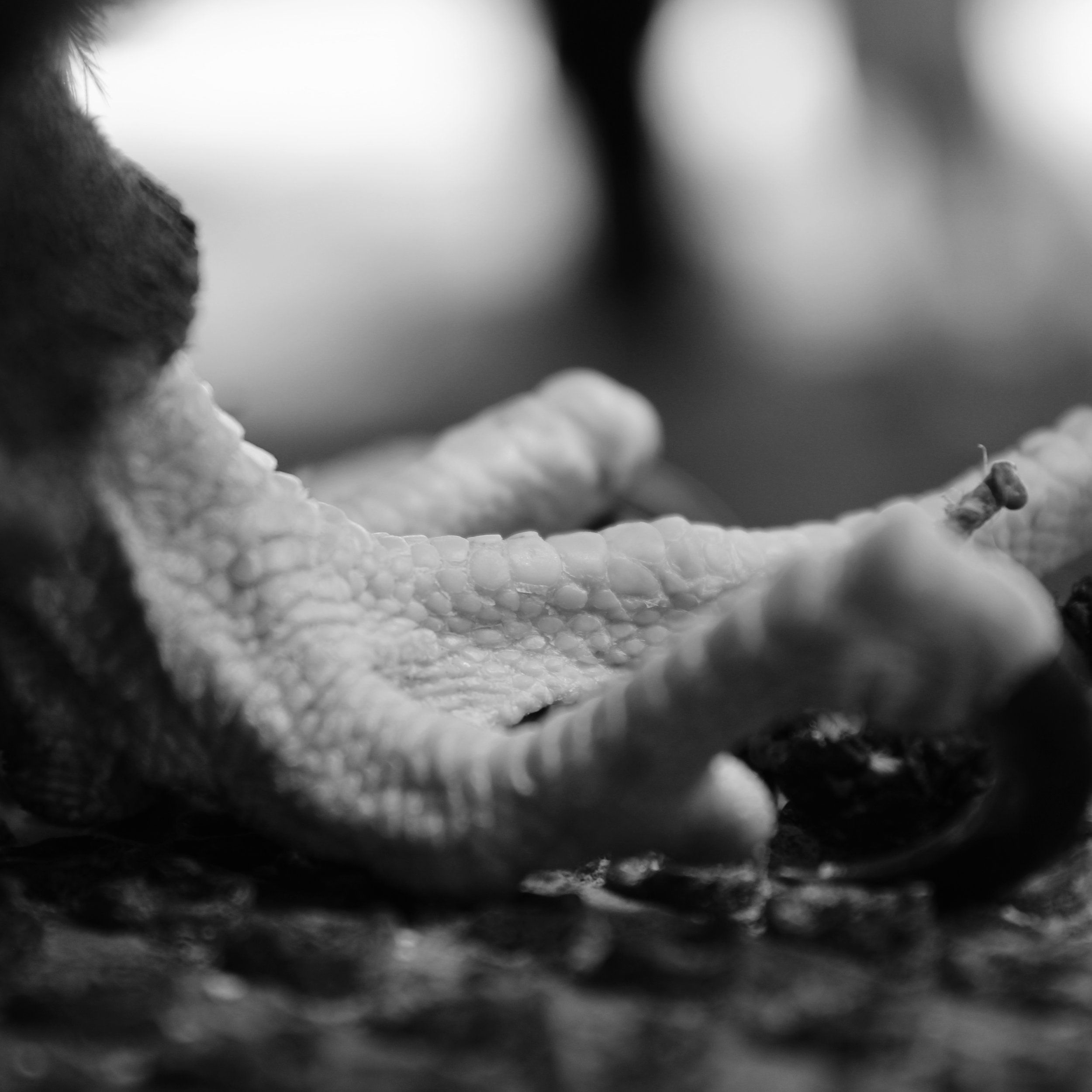
My connection to wildlife began long before tattooing. As a boy, I was constantly exploring nature and bringing home whatever creatures I could find. Snakes, lizards, birds, rabbits, ducks, mice. There were usually only two possible outcomes: eventually releasing the animal or losing it. I drew nearly everything I brought home. No matter how frustrated my parents became, they would usually let me keep it, even if only for a few days. As I grew older, I developed an especially deep appreciation for birds. Perhaps that came from my mother and grandmother, but eventually that appreciation distilled into what I consider the apex of avian life: birds of prey.
My grandfather worked at NASA’s Ames Research Center in California and later contributed to the Apollo program, specifically the second stage of the Saturn V. His home in Glendale, Oregon, was filled with paintings, drawings, and sculptures of birds of prey. He passed away in 2012, and I never had the opportunity to share my appreciation for these animals with him. Today, I recognize that much of that appreciation undoubtedly comes from him. I admire their symmetry, their extraordinary design, and the intelligence behind their eyes. What I wouldn’t give to sit on my grandfather’s porch and talk with him about the birds we both loved. I may not be able to work on rockets as he did, but I can live vicariously through the world of falconry.
For years, falconry remained something I admired from a distance, something that seemed fascinating, but perhaps unattainable. That changed when I moved to Idaho’s Treasure Valley. I discovered that I had unknowingly moved into the heart of a remarkable community dedicated to birds of prey. Here I found the World Center for Birds of Prey, the Archives of Falconry, and The Peregrine Fund. Suddenly, falconry was no longer something I could only admire from afar. It was something I could actually pursue.
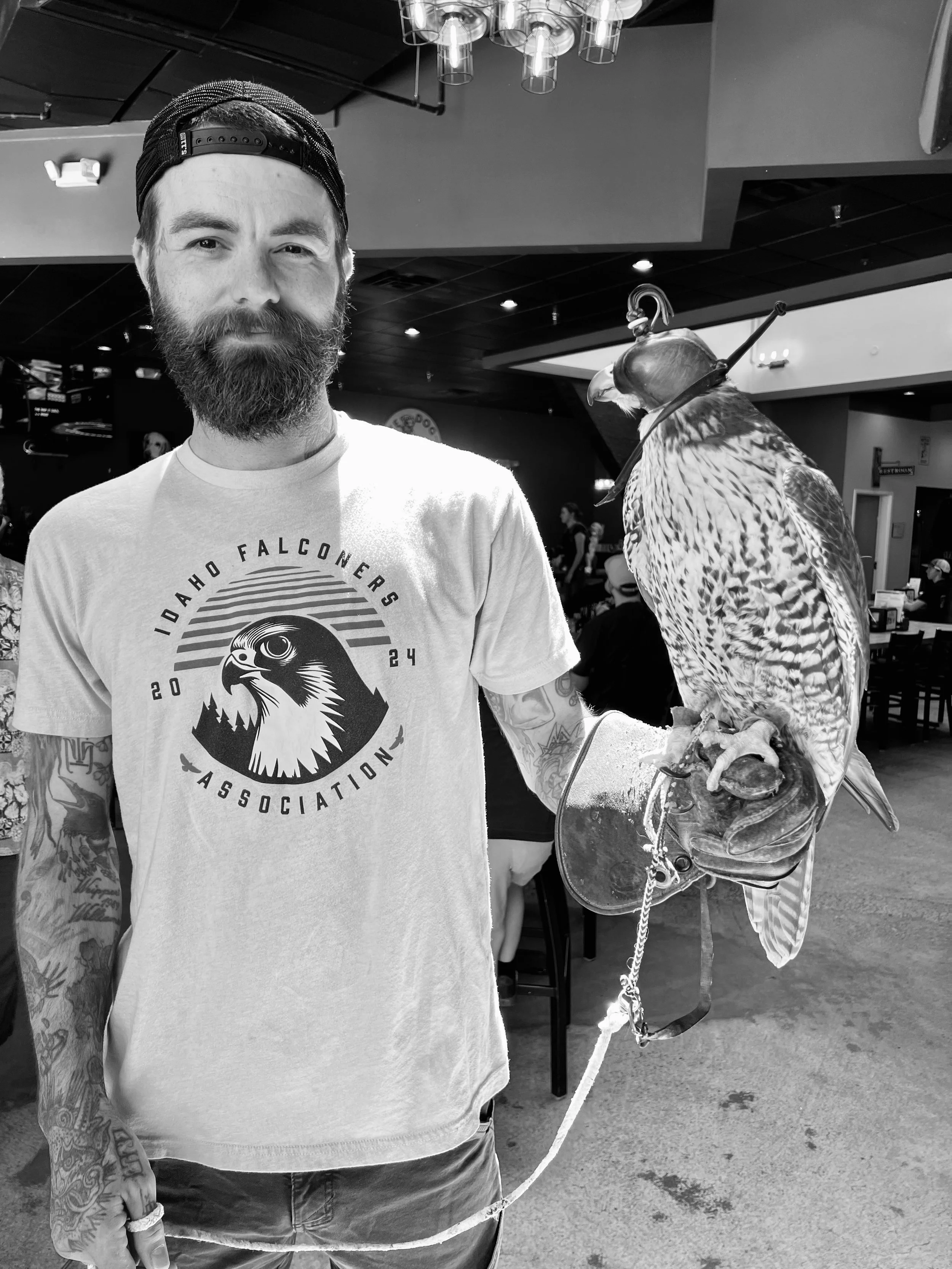
I have drawn many birds of prey and tattooed even more throughout my career. Tattooing demands accuracy. After years of studying animals and learning to reproduce them faithfully on skin, I was struck by how closely the disciplines of tattooing and falconry are connected.
Both require an apprenticeship. Both depend on handmade and handcrafted equipment. Both are built upon husbandry, discipline, and techniques passed down through generations. That connection made my fascination with falconry feel almost inevitable.
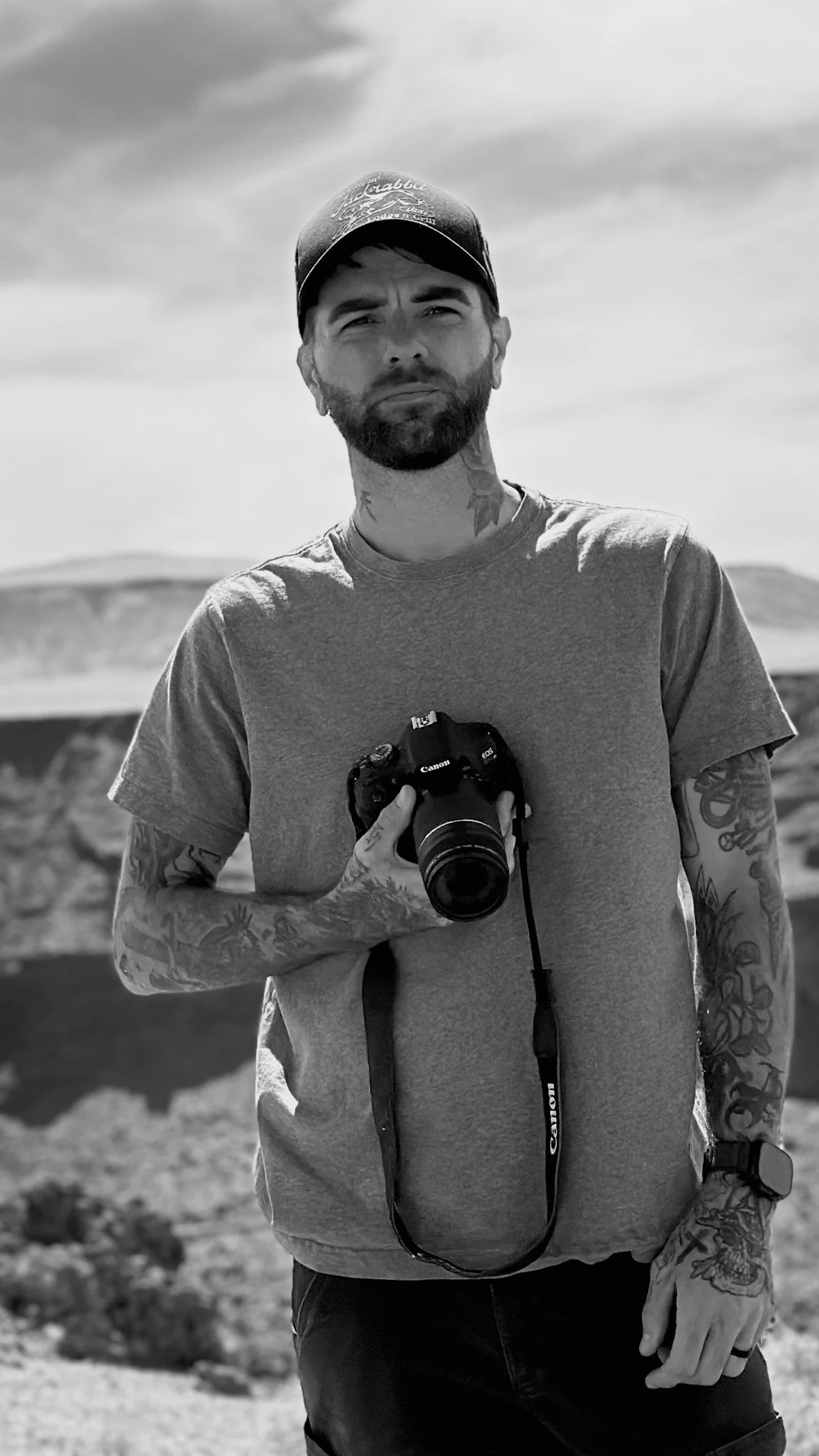
Looking back now, I can see that none of this happened by accident. All of it was possible because of God. He has not always been at the center of my life. For much of my journey, I didn’t fully recognize His presence or understand where He was leading me. But looking back, I can see His hand through the struggles of my upbringing, the challenges of illness, the doors that closed, and the opportunities that opened in their place. Through circumstances I could not understand at the time, I believe He was protecting me, providing for me, and guiding me toward where I am today.
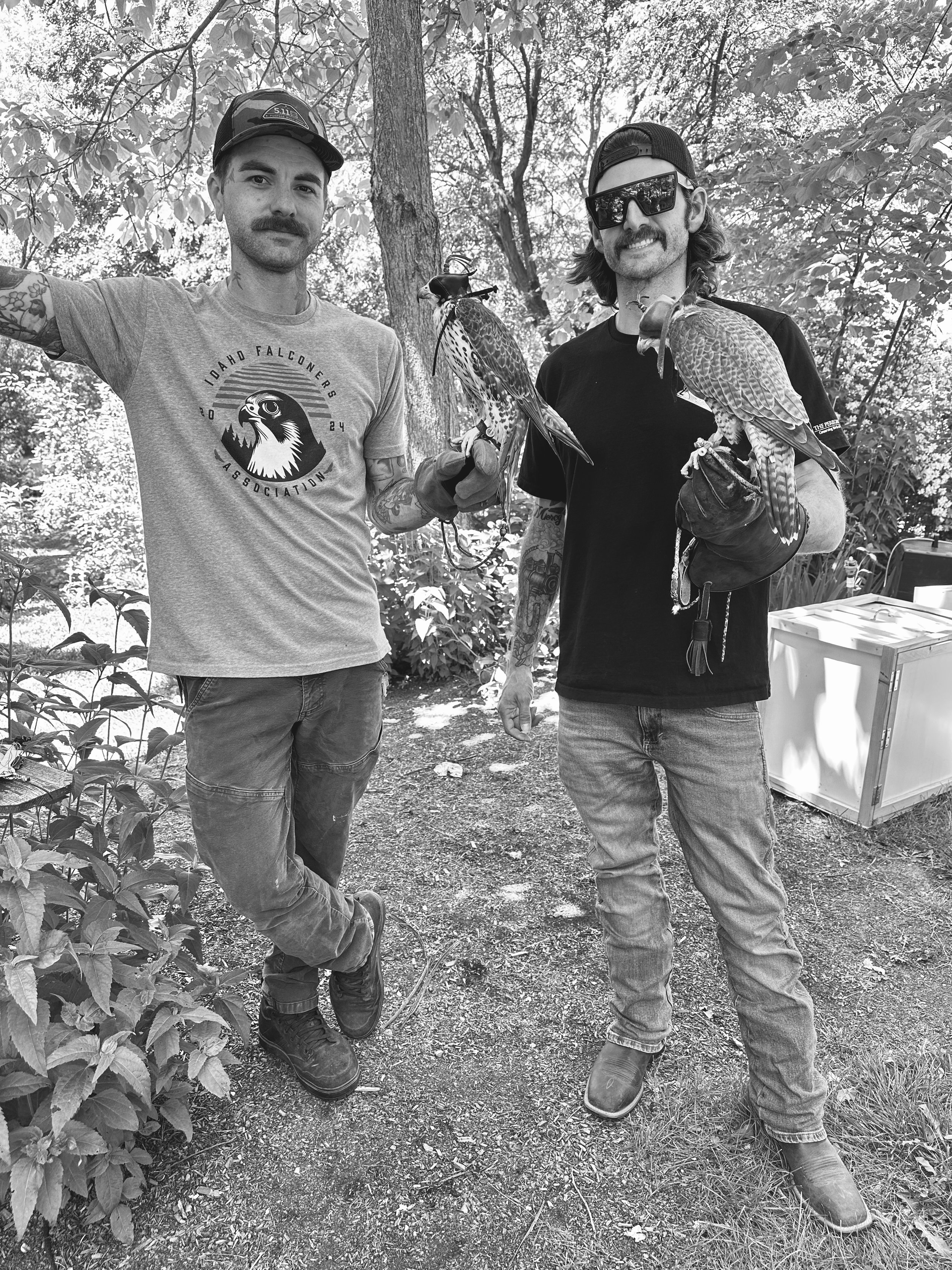
My buddy Nate and I at Raptor Fest 2024
I wish I had discovered falconry sooner. But perhaps I discovered it exactly when I was meant to.
Today, my goal is to faithfully recreate these extraordinary animals through fine art, combining careful observation with techniques inspired by the painters who came before me. Through this work, I hope to contribute something lasting to the visual archives of falconry and tattooing. Two crafts that have shaped my life and continue to inspire me. This work is my way of honoring God, the animals He created, the traditions and crafts that have shaped my life, the artists and mentors who came before me, and the people who taught me to see the world.